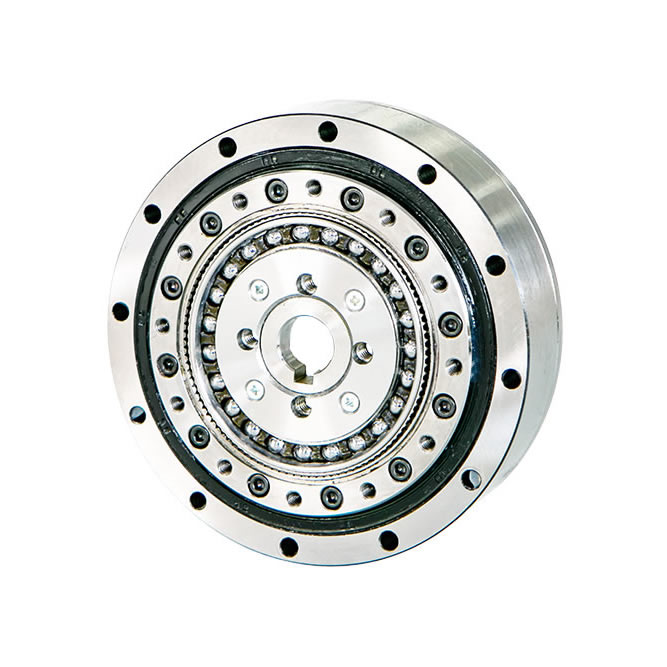
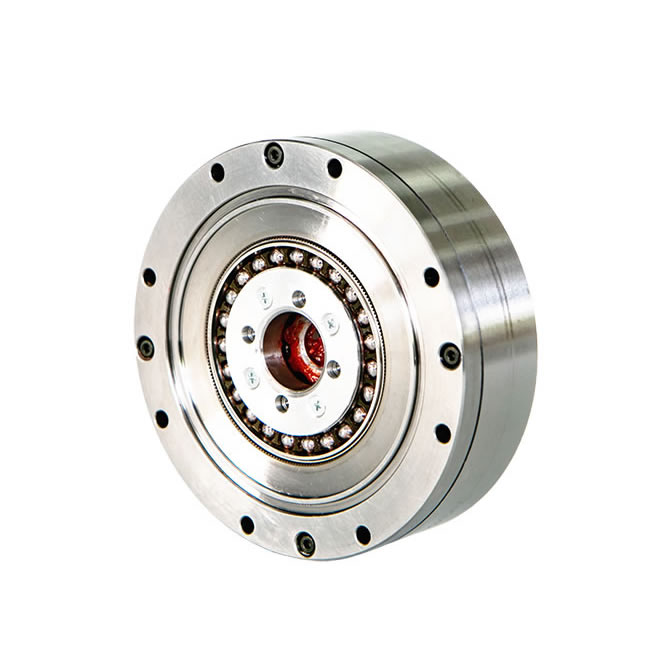
Reducer is the "power joint" of industrial robots, which achieves precise motion control of robot joints by reducing motor speed and amplifying output torque. Its core functions include:
Motion accuracy guarantee: The reducer converts the high speed of the servo motor into the low-speed high torque required by the joint, ensuring that the motion trajectory error is less than 1.5 arc minutes (29 arc minutes), meeting the requirements of high-precision scenarios such as welding and assembly.
Load capacity improvement: RV reducers can carry heavy loads (such as handling robots), while harmonic reducers are suitable for lightweight joints (such as wrists). The combination of the two allows the robot's load range to cover several kilograms to several hundred kilograms.
Dynamic stability optimization: Reduce system vibration through inertia matching, minimize shaking during high-speed motion, and improve repeat positioning accuracy (such as sorting robotic arms)
Application areas and breakthroughs in localization
Typical application scenarios:
Multi joint robot: A 6-axis robotic arm requires 4-6 RV reducers to achieve flexible movement;
AGV car: The driving wheel adopts RV reducer to ensure the accuracy of movement;
Humanoid robot: The waist/leg load-bearing joints rely on high rigidity RV reducers.


 400-780-5898




 沪公网安备 31011202009509号