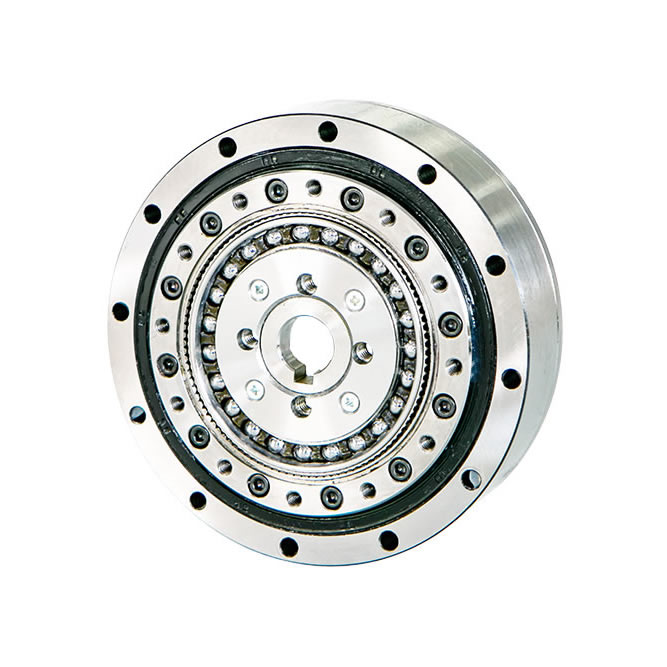
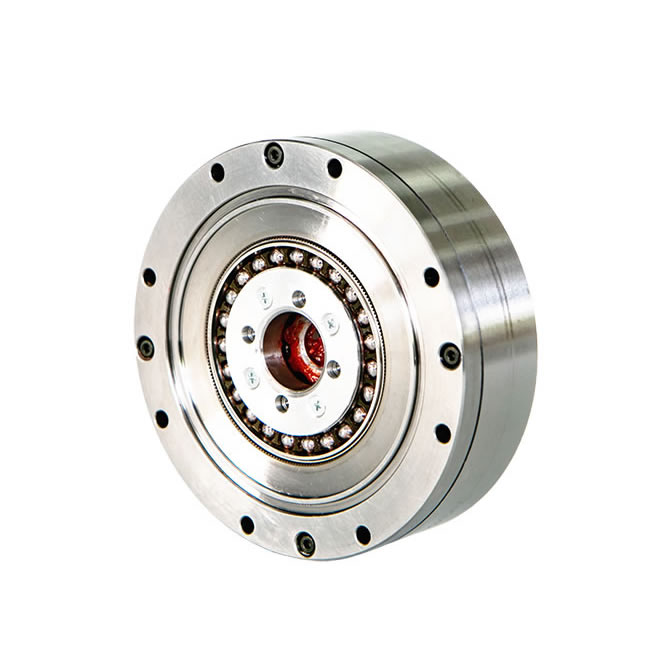
The reducer plays a pivotal role in photovoltaic power generation systems, primarily serving to enhance power generation efficiency and facilitate automated operation. Its core function is evident in two major areas: photovoltaic module manufacturing and solar tracking systems.
Main application scenarios
Photovoltaic module automated production: On the manufacturing assembly line of photovoltaic panels, reducers are the core components that drive various precision equipment.
Silicon wafer cutting: In a multi-wire saw, a reducer drives the spindle to perform high-precision, high-speed cutting, ensuring uniform thickness and smooth surface of the silicon wafer, thereby enhancing material utilization
Cell welding: used in string welding machines to precisely control the position and speed of the welding head, ensuring welding quality and reducing cold solder joint and misalignment
Automatic handling and sorting: Drive AGV (Automated Guided Vehicle) and robotic arms to achieve automatic handling, positioning, and sorting of components on the production line, improving the overall level of automation
Solar Tracking System: This represents the most direct application of gear reducers in photovoltaic power generation, where they adjust the angle of photovoltaic panels to maximize sunlight absorption.
Single-axis/Dual-axis Tracking: The reducer drives the photovoltaic array to rotate in the horizontal direction (single-axis) or in both the horizontal and elevation directions (dual-axis), ensuring that the photovoltaic panels are always facing the sun, thereby significantly improving the power generation efficiency per unit area
Outdoor reliability requirements: The reducers used in tracking systems must possess excellent weather resistance, high rigidity, and long lifespan to withstand the long-term challenges posed by complex outdoor environments, such as wind, rain, dust, and temperature variations


 400-780-5898




 沪公网安备 31011202009509号