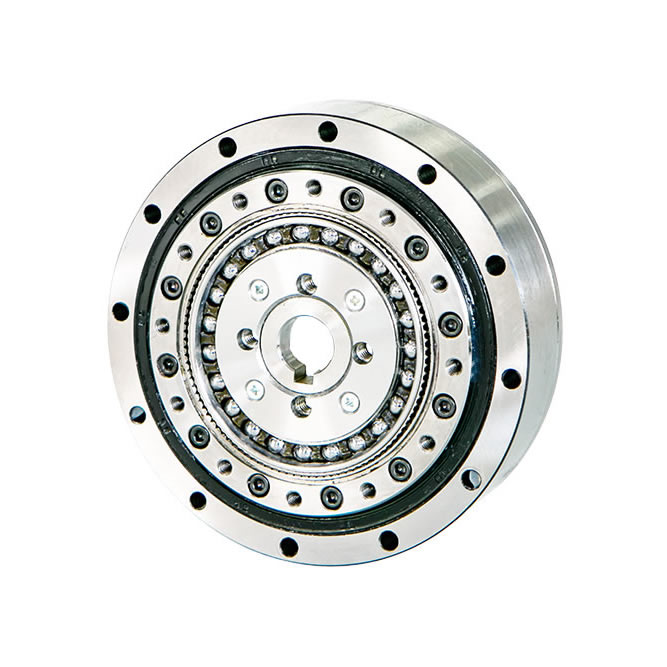
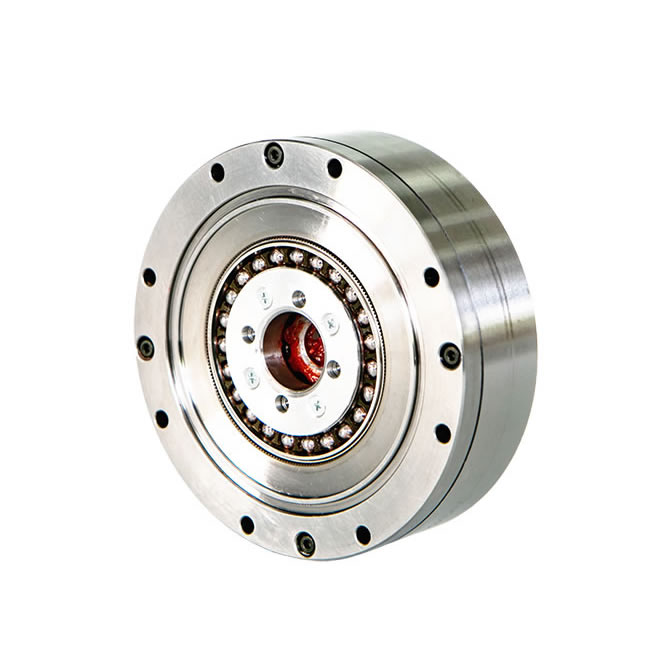
High precision planetary reducers are core precision transmission components suitable for high-end intelligent manufacturing fields such as robots and automation equipment. This device relies on the classic structure of planetary reducers, combined with high-precision machining and heat treatment processes, to balance structural stability and transmission accuracy. With its unique performance advantages, it is widely used, but there are also certain application limitations. The specific advantages and disadvantages are as follows:
1、 Core advantages
1. Strong load-bearing capacity and excellent rigidity
The structure adopts a multi tooth simultaneous meshing form, which can effectively disperse the transmission load, has strong impact load resistance and high torque output performance, can adapt to heavy-duty working conditions and high dynamic response automation work scenarios, and has excellent operational stability.
2. High transmission efficiency and wide power adaptation range
The transmission loss is extremely low, and the conventional transmission efficiency can reach over 90%; The power adaptability is flexible, covering the entire operating range from low power to high power, with a maximum input power of up to 104 kW, which can meet the transmission needs of different specifications of automation equipment.
3. Compact structure and easy integration
By relying on optimized design of power splitting and multi tooth meshing, the equipment can significantly reduce its overall volume and weight while achieving high reduction ratio transmission. The overall structure is compact and exquisite, making it easy to adapt to installation scenarios with limited space. The equipment has strong integration.
4. High precision, reliable operation, and long lifespan
The core gear adopts high-end manufacturing processes such as 20CrMnTi carburizing and quenching, precision grinding, etc., effectively controlling the backlash and greatly improving the transmission accuracy; The equipment runs smoothly, with low operating noise and strong adaptability to working conditions. It is not prone to malfunctions during long-term operation and has an excellent overall service life.
5. Simple operation and maintenance, low usage cost
The overall structural design is scientifically reasonable, with good sealing and stability. Most of them adopt maintenance free or long-term maintenance design, which does not require frequent maintenance and greatly reduces the labor and material costs of equipment maintenance in the later stage.
2、 Main drawbacks
1. The range of single-stage transmission ratios is limited
Compared to harmonic reducers, high-precision planetary reducers have a smaller single-stage reduction ratio range. If the equipment requires a transmission condition with a large transmission ratio, it must be achieved through the combination of multi-stage reducers, which increases the complexity of equipment configuration to a certain extent.
2. Strict requirements for installation accuracy
The equipment has extremely high requirements for installation technology, axis alignment accuracy, and pre tightening force control. If the accuracy does not meet the standard during installation, it will directly lead to a decrease in transmission accuracy, an increase in operating noise, accelerated equipment wear, and significantly shorten the service life of the equipment.
3. There are shortcomings in operating noise
Even though precision machining optimization has effectively reduced operating noise, under the same working conditions and accuracy standards, its overall operating noise is still higher than that of harmonic reducers, and its adaptability is insufficient in scenarios with ultra-low noise requirements.
4. High cost high-end products and insufficient domestic competitiveness
At present, the domestic high-end precision reducer market is still dominated by German and Japanese foreign brands, which have significant advantages in material research and development, structural design, and quality control, and their product prices are relatively high; Domestic brands are mostly concentrated in the mid to low end market, and there is still a gap between the precision and stability of high-end products and imported products. The core competitiveness needs to be improved.




 沪公网安备 31011202009509号