How to distinguish between servo motors and planetary gearboxes?

Release time:2026-04-16

Publisher: Admin
Planetary reducers and servo motors are both core basic devices in the field of industrial automation, widely used in various precision transmission and intelligent control equipment, playing a key role in mechanical power transmission and precise motion control. Although the two are used in conjunction and work together to ensure stable operation of the equipment, there are essential differences in equipment attributes, structural principles, functional roles, and application scenarios. This article will comprehensively analyze the core differences between the two from multiple dimensions, providing reference for industrial selection and equipment application.
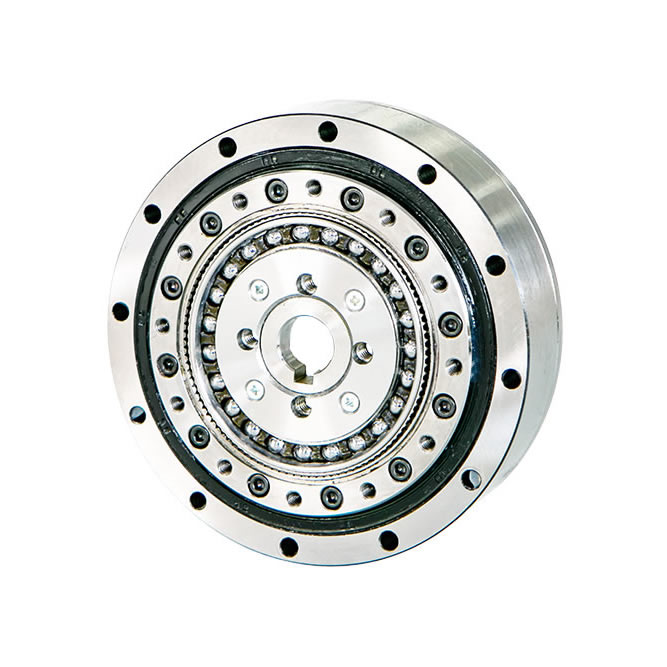
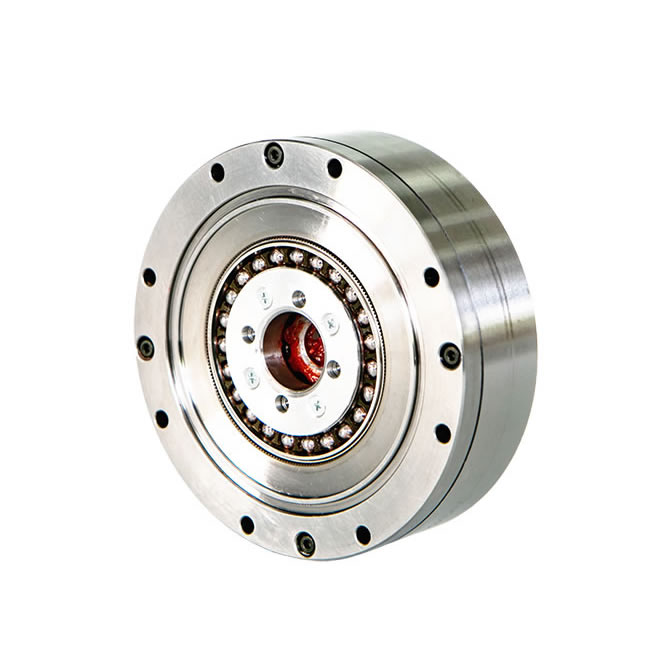
Planetary reducers belong to mechanical transmission devices, with core functions of power conversion and torque amplification. It relies on a planetary gear transmission structure consisting of a sun gear, planetary gears, and an internal gear ring. By fixing the reduction ratio, it converts the high-speed and low torque power input by the motor into low-speed and high torque output power. This device has the advantages of high transmission efficiency, compact structure, large output torque, long service life, smooth transmission, and small return clearance. It has excellent transmission stability and accuracy, and is mainly suitable for heavy-duty, low-speed, and high torque working conditions. It is widely used in industrial machinery equipment, automated production lines, and other scenarios that require transmission accuracy and load-bearing capacity.
Servo motors are high-precision motion control power devices, with the core function of achieving precise and controllable output of speed and position. The equipment consists of three parts: the motor body, high-precision encoder, and dedicated servo controller. Relying on a closed-loop feedback control system, it can collect real-time motion status data of the equipment, dynamically adjust operating parameters, and accurately respond to control instructions. With its core advantages of fast response speed, high positioning accuracy, smooth operation, and strong controllability, servo motors are often used in high-end scenarios such as CNC machine tools, industrial robots, and precision medical equipment that require extremely high position accuracy and motion sensitivity.
At the level of structural composition, there is a significant difference between the two. The planetary gearbox is mainly composed of multiple sets of planetary gear transmission pairs, which can be matched with different reduction ratios and diverse torque and speed requirements through single-stage or multi-stage gear combinations according to actual working conditions. The overall structure is pure mechanical transmission without electrical control modules. The core structure of the servo motor consists of the motor body and a high-precision encoder. It relies on real-time feedback of speed and position data from the encoder, combined with a controller to form a closed-loop control. It relies on the electrical system to achieve precise motion control. The core structure is the integration of electrical control and power output.
From the perspective of working principle and application positioning, the division of labor between the two is clear. The working principle of planetary gearbox is pure mechanical gear meshing transmission, which only reduces the speed, amplifies the torque, and buffers the load of the input power, and does not have autonomous control ability. The core solution is to meet the needs of "heavy load and stable power transmission" of the equipment. Servo motors rely on electronic control systems and feedback mechanisms to work, precisely regulating the start stop, speed, and displacement of the motor through program instructions. The core solution is to meet the requirements of "high-precision and controllable motion" of equipment, achieving precise automation control.
In terms of control methods, there are also significant differences between the two. The planetary gearbox is a passive transmission component without an independent control system. It usually works with a regular motor and has a simple control logic. It only completes power transmission with the front-end power equipment. Servo motors are active control devices that must be equipped with dedicated servo drivers and controllers. Through continuous signal feedback and parameter correction, closed-loop control is formed, and the control logic is more precise and complex. It can achieve millisecond level response and micrometer level positioning control.
In summary, planetary gearboxes and servo motors belong to industrial equipment with complementary functions and different attributes. Planetary reducers focus on mechanical transmission, specializing in high torque, high load capacity, and stable transmission, suitable for precision transmission scenarios with heavy loads and low speeds; Servo motors focus on precise motion control, with a focus on high response, high precision, and controllability, suitable for precision positioning and intelligent motion scenarios. Clearly distinguishing the functions and characteristics of the two can help engineering personnel select and use them reasonably according to actual working conditions, effectively improving the operational accuracy, stability, and work efficiency of automation equipment.




 沪公网安备 31011202009509号