Why is a precision gearbox a planetary gearbox? Let's take a look at the technical specifications!

Release time:2020-07-21

Publisher: Admin
Industry insiders know that precision planetary reducers are high-precision reducers, and can be said to be the most precise reducers at present. But why can't other reducers achieve the precision of planetary reducers? Why can planetary reducers achieve such high precision? Shangying Transmission Technology (Shanghai) Co., Ltd. brings a little knowledge to everyone.
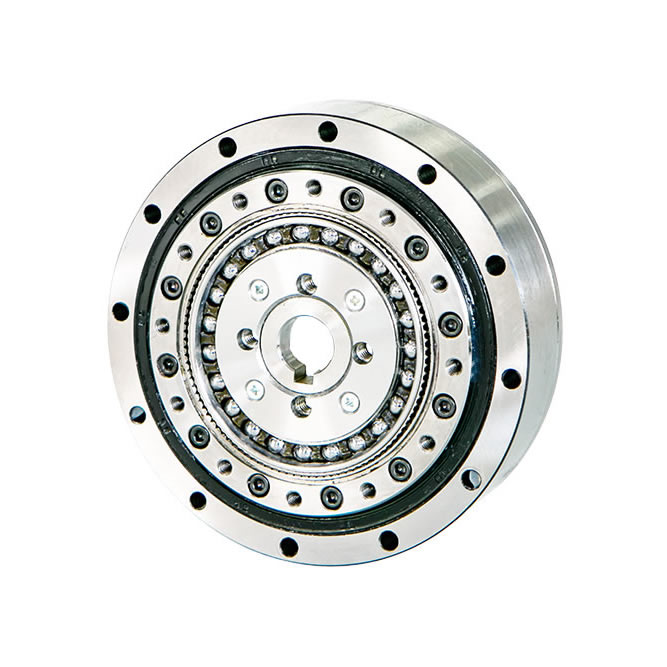
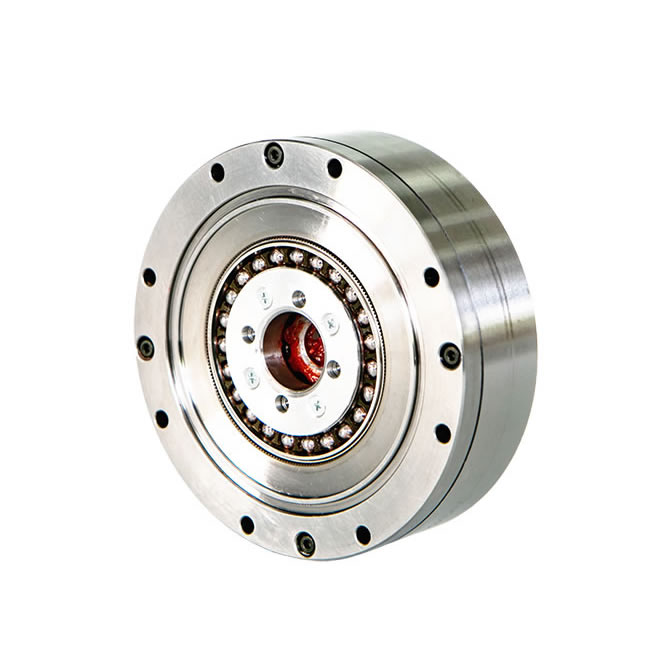
Precision planetary gearbox is another term for planetary gearbox in the industry.
Its main transmission structure is: planetary gear, sun gear, and internal gear ring.
Compared to other reducers, precision planetary reducers have the characteristics of high rigidity, high precision (up to 1 point per stage), high transmission efficiency (97% -98% per stage), high torque/volume ratio, and lifetime maintenance free. Most of them are installed on stepper motors and servo motors to reduce speed, increase torque, and match inertia.
In order for everyone to have a better understanding of planetary gearboxes and some technical parameters.
Reduction ratio: refers to the ratio of input speed to output speed.
Grade: Refers to the independent reduction gear system composed of the sun gear and its surrounding planetary gears. If there is only one gear system in the reducer, we call it "Grade 1". To achieve a larger reduction ratio, multi-stage transmission is required.
Noise: It is the volume measured in decibels (dB) at a distance of 1m from the gearbox when the input is 3000r/min and there is no load.
Rated output torque: refers to the torque that can be continuously output at the output end of the reducer in S1 mode, and can therefore be regarded as the basis for selection.
High output torque: refers to the large torque that the reducer can withstand under dynamic load.
Emergency stop torque: refers to the large torque that the reducer can withstand under static load, limited to 1000 times.
Allowable thermal input speed in T2n and S1 modes: refers to the rated output torque output in S1 mode, and the allowable input speed at the input end of the gearbox. For different operating conditions, NCP can be used to calculate the allowable input speed in detail.
High speed mechanical input speed: refers to the relatively high speed that can be input into the input end of the reducer in a short period of time.
Rotational inertia: refers to the measurement of the inertia of a rigid body when it rotates around an axis (the characteristic of a rotating object maintaining its uniform circular motion or stillness), usually represented by J.
Return clearance: an important indicator of gearbox accuracy.
Axial bearing capacity: refers to the axial bearing capacity of the output shaft of the reducer.
Radial bearing capacity: refers to the radial bearing capacity of the output shaft of the gearbox.
Full load efficiency: refers to the efficiency of the gearbox when operating at a temperature of 70 ℃ and outputting the rated output torque at an input of 1000rpm.
Working temperature: refers to the allowable temperature range that ensures the normal operation of the gearbox.
The importance of precision planetary gearboxes with so many parameters, where can such a good machine be produced? Shangying Transmission Technology (Shanghai) Co., Ltd. provides professional services for you!
Latest articles
Related reading




 沪公网安备 31011202009509号